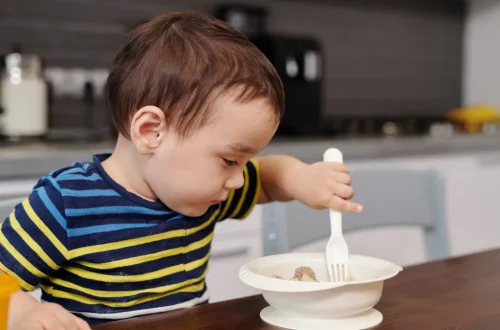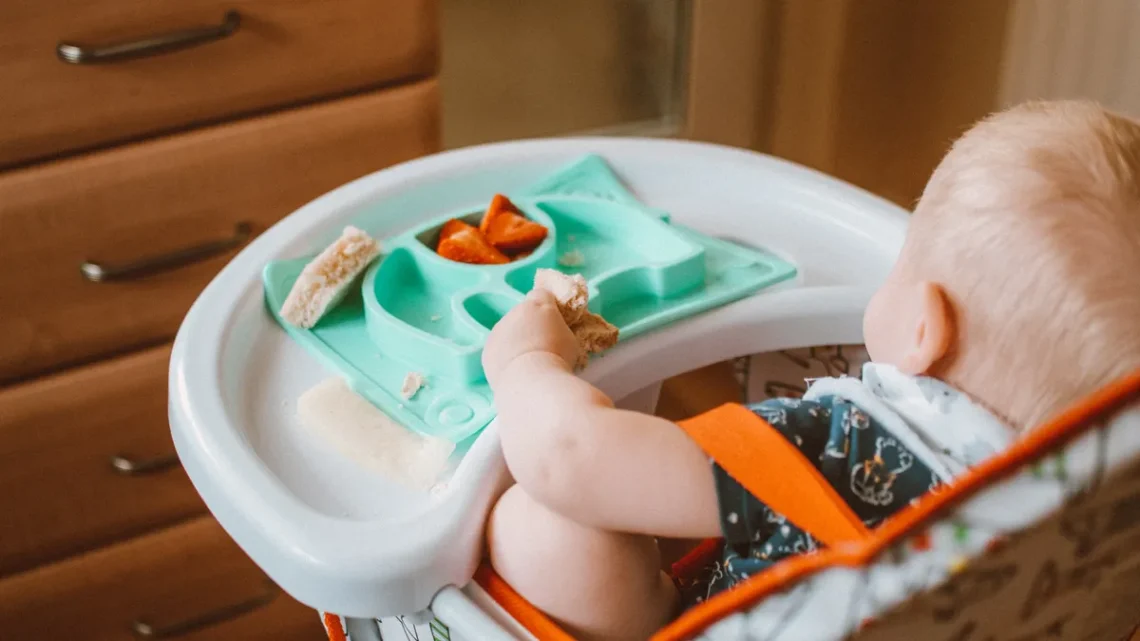
Last updated: November 05, 2026
In short: baby lunch for Baby Lunch Ideas for When Your Child Starts Solids and Needs Soft Finger Foods works best when it is soft enough to squash between your fingers, cut into shapes a baby can grip, and served in a way that matches the stage your child is actually in. Start with 1 or 2 simple foods per lunch, keep textures soft, and choose pieces that are easy to pick up without teeth.
Key Takeaways
- Soft, simple baby lunch works best when pieces fit a fist, pincer grasp, or both.
- A baby lunch plate usually has one soft produce item, one protein, and a few graspable pieces.
- Good finger foods keep shape, squish easily, and are not slippery or round.
- For baby-led weaning, choose foods that hold together, squash easily, and offer an edge.
If your baby has just started solids, lunch does not need to look like an adult meal in miniature. For Baby Lunch Ideas for When Your Child Starts Solids and Needs Soft Finger Foods, it needs to be safe, manageable, and familiar: soft centers, easy shapes, and foods that let a baby practice chewing motions before many teeth are in place.
What baby lunch should look like at the start of solids
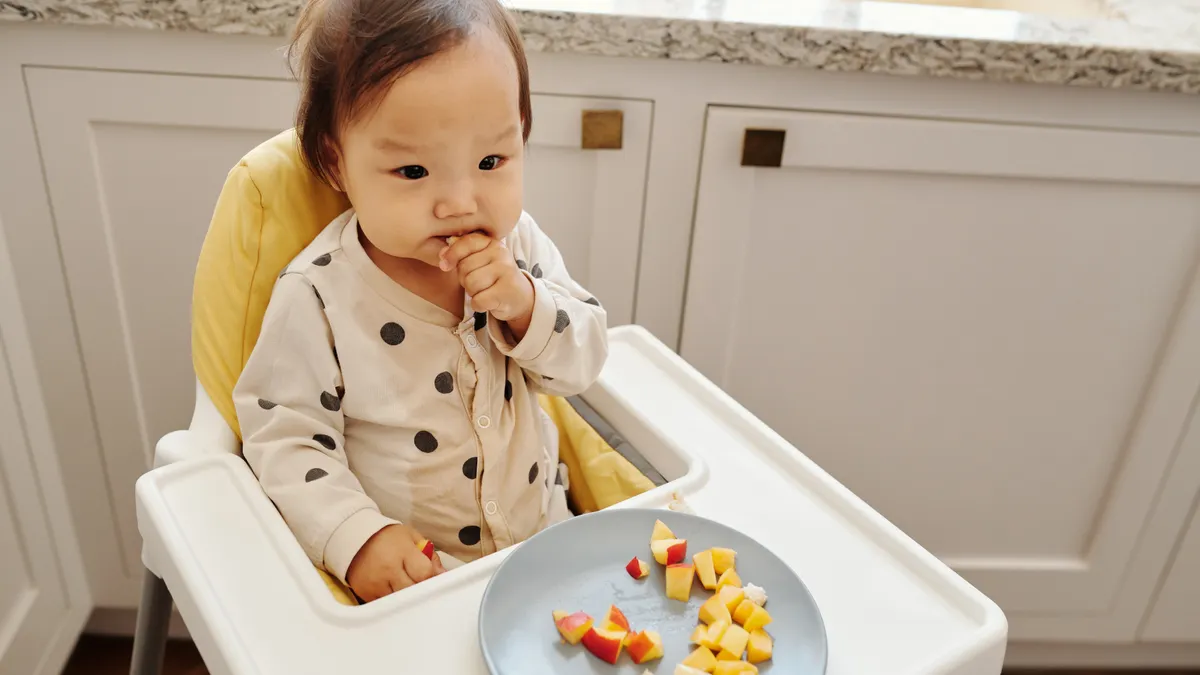
Baby lunch should be soft, simple, and shaped for a fist, pincer grasp, or both. The goal is not variety on the plate; the goal is a few foods that are easy to handle and safe to gum.
At the start of solids, lunch is often 2 or 3 items: one soft fruit or vegetable, one protein-rich food, and sometimes a starch. That can be avocado and banana one day, then sweet potato and scrambled egg another day. The exact mix matters less than the texture. A food can be nutritious and still be the wrong shape if it is slippery, hard, round, or sticky in a way that makes it difficult to manage.
A useful rule is this: if you can squash the food easily between your thumb and forefinger, it is usually closer to the right texture for early finger food eating. That does not replace common sense, and it does not mean every soft food is automatically suitable in every form. A whole grape is soft in the middle and still unsafe because of its shape. A raw apple slice can be too firm even if it seems harmless.
This stage also works best with small portions. A baby may only eat a few bites and then spend the rest of the time smearing yogurt, studying peas, or dropping tofu off the tray. That is normal for first solids. Lunch at this age is practice, not a performance.
Two trusted sources worth knowing are the NHS guidance on starting solid foods and the American Academy of Pediatrics’ parent resources on introducing solids. They both support the same broad idea: start with soft textures and age-appropriate shapes rather than strict menus. For more background, see the NHS page on starting solid foods and the AAP’s HealthyChildren guidance on starting solids.
How do I build a baby lunch plate?
Build a baby lunch plate by choosing one soft vegetable or fruit, one protein, and one easy-to-grip shape, then serving only a few pieces at a time. That keeps the meal simple enough for a baby to explore without creating a plate that feels overwhelming or unsafe.
A practical method:
- Pick one main food in a soft form, such as avocado wedges, banana spears, or steamed vegetables cut into sticks or small florets. The result should be a piece that can be held and squashed easily.
- Add one protein food, such as scrambled egg, soft tofu strips, or mashed beans pressed into a patty-like shape. Protein helps turn lunch from a snack into a meal.
- Choose one texture that gives practice with grasping, such as a thick strip of toast or a soft wedge of sweet potato. The piece should stay together when lifted, not crumble into hard crumbs.
- Serve 2 to 4 pieces of each food on a plain plate or suction bowl. Fewer pieces reduce clutter and let you see what your baby can actually pick up.
- Cut food into shapes that match hand size: long spears for early palmar grasp, or small bite-size pieces once your baby uses thumb and forefinger well. The plate should look sparse rather than crowded.
- Stay nearby and let your baby work through the meal at their own pace. The expected result is a slow lunch with lots of touching, a few bites, and some mess.
The biggest mistake is making lunch too complicated too soon. A mix of six foods can look impressive to an adult and still be harder for a baby to manage than one or two well-prepared options. Another mistake is making everything the same texture. Babies need soft food, but they also need a chance to experience slightly different shapes and resistance.
Best soft finger foods for baby lunch
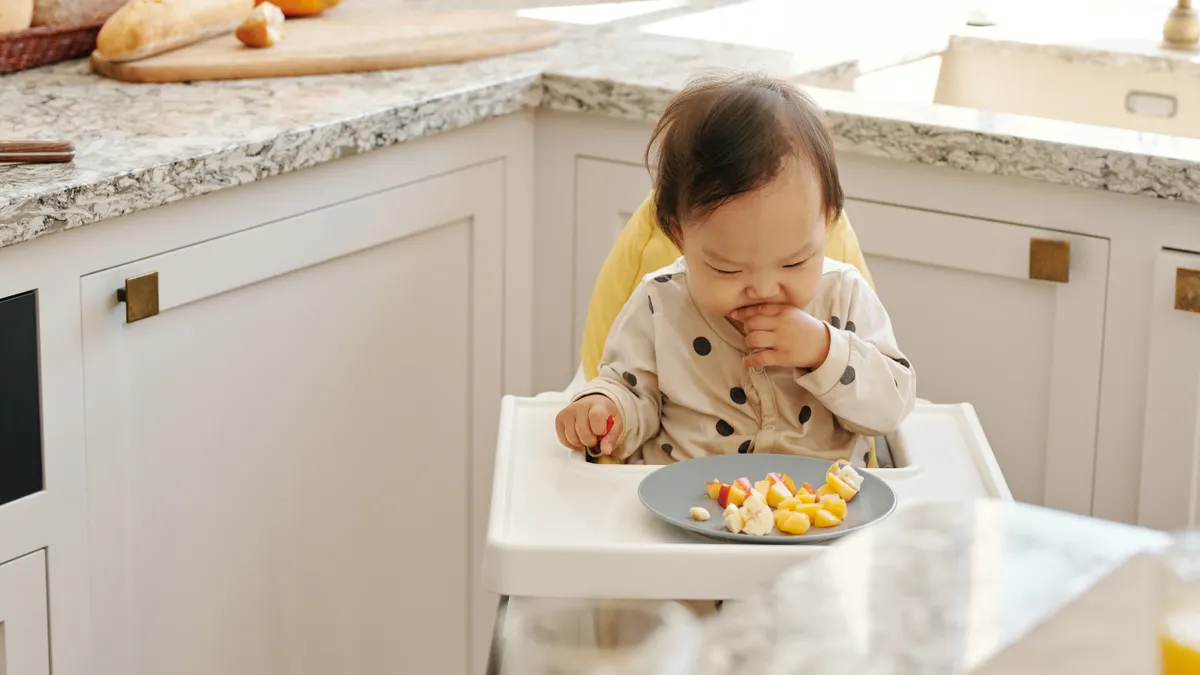
Some of the best soft finger foods for baby lunch are foods that hold their shape, compress easily, and are large enough to grasp without being slippery or round. That is why avocado, banana, sweet potato, peas, scrambled egg, tofu, and steamed vegetables keep showing up in baby-feeding advice: they are easy to soften, portion, and serve in beginner-friendly forms.
Here is how those foods work in practice:
- Avocado: Cut into thick wedges or long slices. Leave the skin on part of the wedge as a built-in handle if needed. The flesh should be ripe enough to mash easily.
- Banana: Serve as thick spears or short halves. A very ripe banana is softer and less frustrating than one that is still firm.
- Sweet potato: Roast, steam, or bake until very soft, then cut into sticks. It should collapse under gentle pressure.
- Peas: Offer cooked peas that are soft enough to squish. For some babies, peas are easier to manage when lightly mashed or tucked onto a spoon for early practice.
- Scrambled egg: Cook until set but still soft, then break into manageable curds or soft ribbons. Dry, browned egg is harder to gum.
- Tofu: Use firm or extra-firm tofu cut into strips, then serve plain or lightly seasoned. Tofu gives a soft, neutral protein option that holds its shape.
- Steamed vegetables: Think carrot sticks, broccoli florets, zucchini spears, or green beans cooked until tender. They should bend slightly and squash easily.
Two details matter more than the food list. First, shape changes safety. A grape cut in half lengthwise is different from a whole grape; a round shape is harder to manage than a wedge or stick. Second, moisture matters. A food that is too dry can be hard to gum, while one that is slick can slide out of small hands.
A lunch built from these foods can be as plain as avocado, egg, and steamed zucchini. That is enough. Seasoning should stay light at first, because the point is not to train a palate for complex flavor yet. The point is to make room for chewing practice and hand-eye coordination. For a broader texture guide, see the CDC’s When, What, and How to Introduce Solid Foods.
Baby-led weaning lunches that actually stay on the tray
Baby-led weaning lunches work best when the food is firm enough to hold, soft enough to squish, and cut so the baby can get an edge without needing a fork. That means the tray should be set up for success, not for decoration.
The best baby-led weaning lunch pieces are often longer than an adult bite and softer than a finger snack from the grocery shelf. A 2-inch spear of sweet potato is easier to grab than a cube. A thick avocado wedge is easier to handle than a slick chunk. A soft strip of tofu is easier to pick up than crumbles.
A good tray setup uses only a few pieces of each food so the baby can focus. For example:
- 2 avocado wedges
- 2 strips of soft tofu
- 3 peas lightly mashed onto a preloaded spoon
- 2 spears of steamed carrot or zucchini
- 1 small portion of scrambled egg
That kind of lunch gives a baby different textures without crowding the plate. It also keeps the meal realistic for a parent who is assembling lunch while someone is crying in the next room and the timer is already going off.
One common mistake is serving foods that look soft but are too tricky in the mouth. Rice, dry toast bits, and crumbly crackers can create more frustration than practice. Another is serving slippery foods without enough grip. Avocado is great, but if every piece is too small or too smooth, it can become a sliding problem rather than a lunch.
For early baby-led weaning, a plate with 3 usable items is often more practical than 8 random ones. That is the trade-off: fewer choices now, better handling and less waste. If a baby eats only one wedge and plays with the rest, that still counts as a normal meal at this stage. For more setup ideas, the finger-foods guide on the baby feeding hub can help.
Easy baby lunch ideas for a 5-minute prep
Easy baby lunch ideas for a 5-minute prep use foods you can soften quickly and cut once, then serve without extra fuss. They are not fancy, but they are repeatable, and that is what most families need on an ordinary weekday.
Here are practical combinations that fit the first solids stage:
- Avocado + scrambled egg: Soft fat plus protein. Serve avocado wedges and soft egg curds.
- Banana + yogurt on a preloaded spoon: This is useful when you want fruit and a spoon practice food in the same lunch. Use thick yogurt, not a runny one.
- Sweet potato + peas: Roast or steam the sweet potato until very tender, then add soft peas that can be squashed.
- Tofu + steamed broccoli florets: Both are easy to grasp if the broccoli is cooked until tender and the tofu is cut into strips.
- Banana + avocado: A simple two-food lunch for days when the baby is new to solids and you want low effort.
- Scrambled egg + steamed zucchini: Soft protein and a vegetable that can be held in a strip.
- Sweet potato + tofu: A warm, filling combination that reheats well in a microwave for about 20 to 30 seconds, depending on portion size and container.
The best part of these lunches is not that they are elaborate; it is that they can be repeated. Repetition helps you learn what your baby can handle, and it helps your baby recognize familiar textures.
A lunch idea is not useful if it requires a special recipe every time. A single baked sweet potato can become lunch on day one, then reappear in a different shape two days later. A few cooked peas can be pressed into a spoonful, then mixed with tofu another day. That kind of reuse saves time without turning lunch into a processed shortcut. If you want more meal-planning structure, the section on breakfast and dinner by age can sit alongside lunch planning.
What baby lunch mistakes cause the most trouble?
The biggest baby lunch mistakes are serving food that is too hard, too round, too sticky, or too much at once. Each one creates a different problem: harder chewing, more choking risk from shape, frustration with grasping, or a messy plate that overwhelms a beginner eater.
A short list of trouble spots:
- Whole grapes, cherry tomatoes, and similar round foods: These are not beginner finger foods. Their shape is the problem, even when the flesh feels soft.
- Raw apple, carrot coins, and other hard pieces: They are too firm for early gums, even if they seem like healthy choices.
- Large clumps of nut butter or thick sticky spreads: These can cling to the mouth in an unpleasant way. Thinly spread or mixed into other foods is the safer approach.
- Dry crumbs and tiny bits: They may seem baby-sized, but they are hard to pick up and disappear on the tray.
- Too many choices: A crowded plate can make a baby more interested in tossing than eating.
The fix is usually simple. Cut food into longer shapes, cook it until it is soft enough to squash, and keep lunch small. If a piece of food cannot be flattened with gentle pressure, it probably does not belong in this stage.
This is also where judgement matters more than trend language. Not every “baby-friendly” recipe is actually useful for the first transition to solids. A muffin marketed for babies may still be too dry, too crumbly, or too sweet to serve the purpose of beginner lunch. By contrast, a plain steamed vegetable cooked properly may be exactly right.
If you want a broader framework for age and stage, the hub on packing by age and eating stage can help place baby lunch in the bigger feeding picture.
How to tell if your baby lunch is the right texture
The right baby lunch texture is soft enough to squash, easy to grip, and shaped so the baby can move it from hand to mouth without fighting it. If you can press the food between your fingers and it gives way, that is usually a good sign.
A simple check before serving:
- Press it between your thumb and forefinger. If it flattens easily, it is closer to the right softness.
- Look at the shape. Spears, wedges, and thick strips are easier than balls, coins, or hard cubes.
- Watch the surface. A little grip helps; a slick, slippery piece is harder to hold.
- Think about the mouth feel. It should break down with gum pressure rather than require teeth.
A baby lunch does not need to be perfect to be useful. Some meals will be mostly practice, and some foods will be touched more than eaten. That is part of the process. The more important test is whether the lunch gave your baby a chance to explore food without making the texture work against them.
The limitation is clear: this advice is for the first stretch of solids and soft finger foods, not for every feeding stage. If your baby has swallowing concerns, a history of gagging that worries you, or any medical reason to question texture progression, talk with your pediatrician or a qualified feeding specialist before changing the plan.
What can a baby eat for lunch after starting solids?
A baby can eat soft, easy-to-grip foods like avocado, banana, sweet potato, peas, scrambled egg, tofu, and steamed vegetables after starting solids. The lunch should be small, simple, and matched to the baby’s current texture skills. Begin with one or two foods and add more only when the earlier textures are going well.
What are safe soft foods for babies?
Safe soft foods for babies are foods that squash easily and do not require teeth to break down. Good examples include ripe banana, avocado, well-cooked sweet potato, soft scrambled egg, soft tofu, and tender steamed vegetables. The shape still matters, so serve them in wedges, strips, or other graspable forms rather than hard rounds.
How do you make baby lunch foods easy to pick up?
Make baby lunch foods easy to pick up by cutting them into thick spears, wedges, or strips instead of small pieces. Leave some surface grip, cook them until tender, and serve only a few items at a time. Foods like avocado wedges, sweet potato sticks, and broccoli florets are easier for small hands than slippery or crumbly foods.
Drafted with AI; not yet reviewed by a person.