Last updated: August 11, 2026
- Key Facts: Most school lunches need 4 to 6 hours of cold retention.
- Criteria used: Insulation performance: Can it keep a cold pack cold for 4–6 hours?
- The USDA recommends keeping perishables below 40°F; once a bag has been open repeatedly and the ice pack is spent, that threshold may not hold.
- Wildkin fits younger kids best, roughly Pre-K through Grade 2.
This article contains affiliate links. We may earn a commission from qualifying purchases at no cost to you.
Quick Answer: The best lunch bag for kids for most families is the Arctic Zone Titan Deep Freeze, with an approximate 8L capacity and a HardBody base that helps it hold shape in a backpack.
Key Facts:
- Most school lunches need 4 to 6 hours of cold retention.
- PackIt is the only pick here that is meant to be frozen overnight.
- Bentgo is the simplest budget option for everyday wipe-clean use.
- Wildkin fits younger kids best, roughly Pre-K through Grade 2.
- Pottery Barn Kids Mackenzie is the durability pick for families replacing bags too often.
- LunchBots is the most explicit non-toxic material choice in this list.
- Fypo is the better fit for older kids who need more room.
By Jamie Crest, who has covered school and outdoor gear for parents for over a decade.
A lunch bag that leaks, smells after two weeks, or falls apart by October is not a minor inconvenience — it means food that arrives warm and unsafe, a child who stops using the bag, and a parent spending money twice. The right kids’ lunch bag keeps food cold for several hours, survives the school bag pile, and cleans up without a fight. This guide cuts through the noise to give you a ranked shortlist you can act on in under a minute, and it focuses on the kids’ lunch bag details parents actually use.
Short version? Buy for the commute, not the brochure.
Quick-Pick Comparison Table
| Product | Best For | Key Spec | Where to Buy |
|---|---|---|---|
| Arctic Zone Titan Deep Freeze | Best Overall | HardBody™ base + Microban lining | Amazon · Walmart |
| PackIt Freezable Lunch Bag | Best for All-Day Cold | Built-in gel panels (freeze the whole bag) | Amazon · Target |
| Bentgo Kids Lunch Bag | Best Budget | Full zip-down flat-clean design | Amazon · Bentgo site |
| Wildkin Insulated Lunch Box | Best for Young Kids (Pre-K–2nd) | Tiny profile, padded handle | Amazon · Walmart |
| Pottery Barn Kids Mackenzie | Best for Durability | Reinforced base, PVC-free lining | Amazon · Pottery Barn |
| LunchBots Insulated Lunch Tote | Best Eco/Non-Toxic Pick | BPA-free, lead-free, phthalate-free | Amazon · LunchBots site |
| Fypo Kids Insulated Lunch Box | Best for Middle Schoolers | Larger capacity, side pocket | Amazon · Amazon |
How I Picked These Lunch Bags for Kids
Because this is an affiliate roundup, the commission note above matters, but it does not change the selection criteria.
I did not test every bag on this list personally — and any reviewer who claims otherwise for a roundup this size is making things up. What I can tell you is the methodology behind each pick.
I cross-referenced parent reviews from major retail platforms, looked at common failure points reported after several months of real use, checked manufacturer specs against what independent parents described, and applied the criteria below. I prioritized bags that appeared consistently across separate parent communities and showed up in long-tail searches like “lunch bag smell after three weeks” and “lunch bag zipper broke.” That pattern of cross-source consistency is the closest thing to reliable signal you get without running your own lab.
Criteria used:
- Insulation performance: Can it keep a cold pack cold for 4–6 hours? That covers most school lunch windows. Bags where multiple reviewers reported lukewarm food by lunch were excluded.
- Cleanability: Wipe-clean or full-wash liner matters more than almost anything else once mold sets in. PEVA and antimicrobial linings are preferred. Fabric-lined interiors that can’t be wiped failed this screen.
- Durability signals: Zipper quality and stitching are the most common failure points. I looked for reports of zippers separating, stitching fraying at the handles, or base panels cracking within a school year.
- Age fit: A bag the right size for a kindergartner may be useless to a fifth grader. I matched bag capacity and handle design to realistic age ranges.
- Material safety: Relevant for kids eating from a bag daily. Bags flagged for off-gassing, phthalate content, or BPA in food-contact linings were excluded or flagged.
A bag can look great and still be a lemon. Happens all the time.
What is the best lunch bag for kids overall?
The best lunch bag for kids overall is the Arctic Zone Titan Deep Freeze for most elementary-school kids. It’s large enough to hold a real lunch, maintains cold reliably, and the lining doesn’t absorb smell.
Who it’s for: Parents who want one bag that does everything reasonably well and doesn’t require a PhD to clean.
Pros
- HardBody™ molded base holds shape in a pile of backpacks and doesn’t collapse onto the food
- Microban antimicrobial lining is a genuine differentiator — parent reviews consistently note it doesn’t start smelling after repeated use the way plain PEVA liners do
- Multiple pockets handle an ice pack plus a snack separately
- Widely available at Amazon, Walmart, and Target, so you’re not locked into one retailer
Cons
- Bulkier than slimmer bags — it doesn’t compress flat into a thin backpack
- The exterior fabric picks up stains and isn’t wipe-clean on the outside
- Not for: Kids who carry everything in one slim backpack and need a bag that packs down to nothing
Key specs: Approx. 8L capacity · HardBody base · Microban-lined interior · top handle + shoulder strap
Check the current price on Amazon
Best for All-Day Cold: PackIt Freezable Lunch Bag
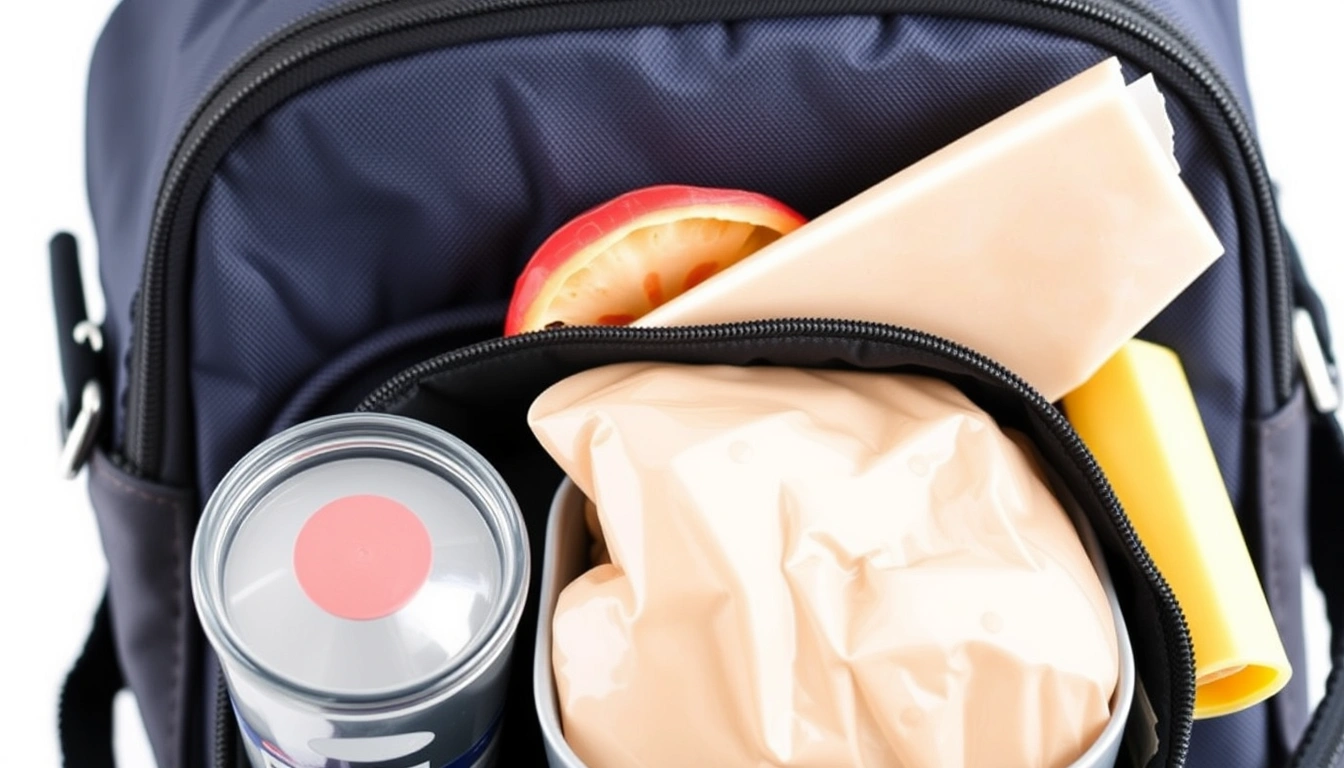
The best for all-day cold is the PackIt Freezable Lunch Bag, because you freeze the entire bag overnight and skip the separate ice pack.
Who it’s for: Kids at schools with no refrigerator access, or anyone whose lunch sits out for five-plus hours.
Pros
- Gel panels are built into the walls; freezing the whole bag achieves longer cold duration than a separate ice pack inside a standard insulated bag — widely reported by parents across multiple platforms
- Collapses flat when not frozen, making it easier to store
- Available at Amazon, Target, and directly from PackIt
Cons
- You must remember to freeze it the night before. Forget once and you have a limp bag with zero insulation
- The frozen bag is stiffer in the morning and harder for young kids to open independently
- Interior space is smaller than it looks once the gel walls are accounted for
- Not for: Families who pack lunches at 7am in a rush without planning ahead
Key specs: Gel-integrated walls · folds flat for storage · top zipper · multiple pattern options
Check the current price on Amazon
Best Budget: Bentgo Kids Lunch Bag
The best budget lunch bag for kids is Bentgo Kids Lunch Bag, a simple insulated bag that does the job without the premium markup.
Who it’s for: Parents who want a functional bag without spending much, or who need a backup for the days the main bag comes home soaked.
Pros
- Full zip-down flat opening makes it genuinely easy to clean — one wipe and it’s done
- Slim profile fits inside a backpack without adding bulk
- The Bentgo brand ecosystem means it pairs well with Bentgo boxes if you already own them
- Available from Amazon and directly from Bentgo’s site
Cons
- Insulation is lighter than the Arctic Zone or PackIt — adequate for a standard 4-hour school day with an ice pack, but not for longer stretches
- Handle stitching shows wear in some long-term reviews after heavy use
- Fewer pockets, so an ice pack and containers have to share the main compartment
- Not for: Families expecting serious insulation performance or kids who are rough on their gear
Key specs: Approx. 5L · PEVA-lined interior · single main compartment · wipe-clean design
Check the current price on Amazon
Best for Young Kids: Wildkin Insulated Lunch Box
The best for young kids is the Wildkin Insulated Lunch Box, sized correctly for small hands and small lunches.
Who it’s for: Pre-K through second grade, where a full-size bag is comically oversized and the child can’t manage complicated closures.
Pros
- Compact profile matches the actual lunch needs of a 4–7 year old without wasted dead space
- Padded handle is easier for small hands to grip than thin nylon straps
- Wide range of licensed and illustrated patterns, which matters more to kids this age than parents realize — a child who likes their bag uses it
- Available at Amazon and Walmart
Cons
- Will feel too small by third or fourth grade — this is a transitional bag, not a long-haul investment
- Insulation is adequate rather than exceptional; a quality ice pack is mandatory
- Some parents report the zipper pull is small and tricky for kids who haven’t mastered fine motor control yet
- Not for: Older elementary kids, or anyone who needs space for a large water bottle alongside food
Key specs: Small form factor · padded carry handle · PEVA lining · name tag inside
Check the current price on Amazon
Best for Durability: Pottery Barn Kids Mackenzie Lunch Bag
The best for durability is the Pottery Barn Kids Mackenzie Lunch Bag, because parents describe keeping it across multiple school years.
Who it’s for: Parents who are done buying a new lunch bag every fall.
Pros
- Reinforced base is one of the most consistently cited durability features in long-term parent reviews — it doesn’t buckle when the bag is dropped
- PVC-free lining addresses material-safety concerns
- Personalizable, which reduces the chance of it walking home with the wrong child
- Available from Pottery Barn Kids and Amazon
Cons
- Price is noticeably higher than every other pick on this list — a real barrier for families buying for multiple children
- Style is classic rather than flashy; some kids prefer more colorful options
- Heavier than budget bags, which adds to a child’s total carry weight
- Not for: Budget-conscious buyers, or families whose kids lose or destroy bags before durability has time to matter
Key specs: Reinforced base · PVC-free lining · multiple size options · monogramming available
Check the current price on Amazon
Best Eco/Non-Toxic Pick: LunchBots Insulated Lunch Tote
The best eco/non-toxic pick is the LunchBots Insulated Lunch Tote, aimed at parents who are not comfortable with standard bag linings around food.
Who it’s for: Families prioritizing non-toxic materials and willing to pay a modest premium for cleaner specs.
Pros
- BPA-free, lead-free, and phthalate-free specs are explicitly documented by the manufacturer — not just implied
- Stainless steel-brand heritage (LunchBots makes steel containers) lends credibility to the material-safety positioning
- Cleans easily; the liner doesn’t hold odors in the way cheaper PEVA does
- Available at Amazon and directly from LunchBots
Cons
- Capacity is modest — designed to pair with LunchBots containers, which are compact
- No hard base, so it can lose shape under a heavy backpack
- Higher price than standard insulated bags for the insulation level provided
- Not for: Kids who need large capacity, or families indifferent to material specs who’d rather spend the money on insulation performance
Key specs: BPA/lead/phthalate-free liner · soft-sided · top zip · pairs with LunchBots container system
Check the current price on Amazon
Best for Middle Schoolers: Fypo Kids Insulated Lunch Box
The best for middle schoolers is the Fypo Kids Insulated Lunch Box, sized for the reality that older kids eat more and carry more.
Who it’s for: Fifth grade and up, especially kids who want a bag that doesn’t look infantile.
Pros
- Larger main compartment fits bigger containers without forcing the zipper
- Side pocket separates snacks or a small drink from the main insulated section
- Neutral styling that doesn’t embarrass an 11-year-old
- Available primarily through Amazon
Cons
- Fewer long-term durability reviews compared to established brands — it’s a newer entrant and the five-year picture isn’t as clear
- Insulation is mid-range; for very long days, a quality ice pack is essential
- Amazon-heavy distribution means fewer physical-store options if you want to see it before buying
- Not for: Parents who want a heritage brand with a long track record, or kids in elementary school who don’t need the extra volume
Key specs: Larger capacity than elementary bags · side water bottle or snack pocket · wipe-clean lining · adjustable shoulder strap
Check the current price on Amazon
Buying Guide: What to Look for in Kids’ Lunch Bags
Insulation Type and Cold Duration
Most insulated kids’ lunch bags use foam insulation sandwiched between an outer fabric layer and an inner lining. The quality of that foam, the thickness, and whether the lining reflects heat all determine how long food stays cold. A bag marketed as “insulated” can range from keeping food cold for two hours to six-plus hours — a gap that matters for a child whose lunch sits in a warm classroom.
If your child’s school has no refrigeration and lunch is five or more hours after the bag is packed, a single ice pack in a standard bag often isn’t enough. Either choose a bag with heavier insulation like the Arctic Zone, or go with the PackIt’s freeze-the-bag system. The USDA’s food safety guidelines recommend keeping perishable food below 40°F (4°C) — a benchmark worth keeping in mind when choosing your insulation system, though for specific food safety concerns, a registered dietitian or your child’s school can advise further.
Lining Materials
This is where I’d push parents to read specs rather than take marketing language at face value. Common lining types:
- PEVA (polyethylene vinyl acetate): Chlorine-free, widely used, easier to clean than fabric. Adequate for most families.
- Microban/antimicrobial treatments: Reduce bacterial growth and smell accumulation, but this is not a medical guarantee. If your child has a recurrent odor or contamination issue, check with a pediatrician, school nurse, or another qualified professional before assuming a liner will solve it.
- Fabric linings: Worst for cleanability. Mold and smell set in quickly and are nearly impossible to fully remove.
- PVC-containing liners: Some budget bags still use them. If you’re avoiding phthalates and BPA in food-contact materials, check the spec sheet.
The American Academy of Pediatrics has published guidance on reducing children’s exposure to certain plastics and food-contact chemicals — worth a look if material safety is a priority in your household.
Zipper Quality
Zippers are the most common failure point. Coil zippers (the standard YKK-style) on decent-quality bags outlast cheap flat zippers by a wide margin. If a bag’s Amazon reviews show a pattern of “zipper broke by January,” that’s a red flag no amount of good insulation can compensate for.
Size by Age
A rough working guide:
- Pre-K through Grade 2: Small bags (~4–5L) — anything larger is hard to carry and wastes space
- Grades 3–5: Medium bags (~6–8L) — room for a main container, snack, and ice pack
- Grades 6 and up: Larger bags (~9L+) — bigger appetite, more food, often a separate snack period
Sizing is often where parents go wrong — buying an aspirational size that doesn’t fit their kid’s backpack or buying small to “let them grow into it,” which just means buying again next year.
Easy-Clean Design
Flat-open designs (like the Bentgo) let you wipe the entire interior in seconds. Tunnel-shaped bags with narrow openings are significantly harder to clean and accumulate debris in corners. If your household routinely deals with leaking containers or spilled drinks, prioritize a bag that opens completely flat. That one design choice can save minutes every week and help the bag last longer.
A wipe-clean opening beats a cute print. Every time.
FAQ
How long should a kids’ lunch bag keep food cold?
Most school lunches need food to stay cold for four to six hours. A quality insulated bag with a frozen ice pack handles that range. For longer windows — say, a full day at camp — choose a bag with heavier insulation or the PackIt’s freeze-the-bag system. The USDA recommends keeping perishables below 40°F; once a bag has been open repeatedly and the ice pack is spent, that threshold may not hold.
How do I get the smell out of a kids’ lunch bag?
For PEVA or antimicrobial linings: wipe with a solution of water and white vinegar, leave open to air-dry fully. For stubborn smell, a paste of baking soda and water left in the bag overnight helps. The real answer, though, is prevention — bags with antimicrobial linings (Microban) accumulate smell far more slowly. Fabric-lined bags that have fully absorbed odor rarely recover.
**Are kids